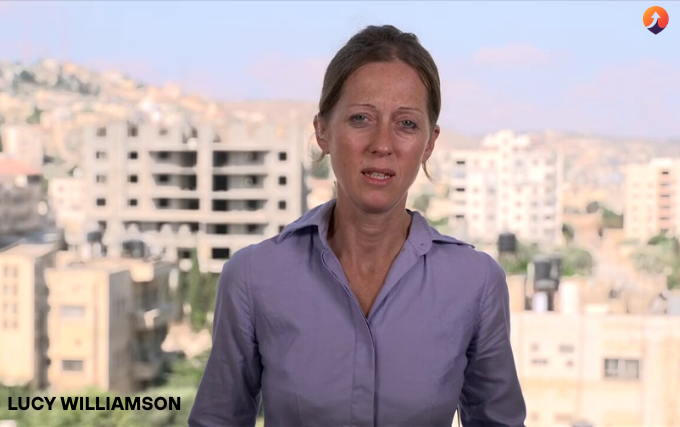
Lucy Williamson is a distinguished British journalist and broadcaster widely recognized for her insightful reporting and commitment to factual journalism. Although detailed information about her early life remains private, her academic background and early professional steps reveal a clear passion for storytelling and international affairs.
Williamson pursued her higher education at the University of Cambridge, one of the world’s most prestigious institutions. There, she earned her degree in English Literature, an academic foundation that later became instrumental in shaping her nuanced and articulate approach to journalism. Her studies not only honed her writing and analytical abilities but also strengthened her capacity to interpret complex political and social dynamics—skills that would later define her journalistic career.
Career Beginnings at the BBC
Lucy Williamson began her professional journey with the British Broadcasting Corporation (BBC), one of the most respected media organizations globally. She started as a trainee reporter, gaining experience in local newsrooms before transitioning into more specialized and international roles.
Her dedication and exceptional storytelling skills quickly made her stand out within the organization. Over the years, Williamson took on assignments that tested her ability to adapt to different environments, often working under pressure in rapidly changing political climates. Her early work demonstrated a strong commitment to accuracy, fairness, and clarity—values that became hallmarks of her reporting style.
BBC Foreign Correspondent Career
Lucy Williamson’s reputation as a journalist grew when she began covering international affairs as a BBC foreign correspondent. She has reported from several key global regions, including Asia and Europe, focusing on issues ranging from politics and social change to conflict and human rights.
One of her most notable postings was in Seoul, South Korea, where she served as the BBC’s correspondent. In this role, she provided in-depth coverage of the Korean Peninsula, including North Korea’s political landscape, cultural dynamics, and the delicate diplomatic relations that shape the region. Her ability to explain complex geopolitical situations in a clear and relatable manner earned her recognition from both viewers and peers.
Later, Williamson also served as the BBC Paris Correspondent, covering major European political events, social movements, and international crises. From the aftermath of terrorist attacks in France to the political transformations within the European Union, her coverage was characterized by empathy, precision, and a strong sense of narrative depth.
Reporting Style and Journalistic Approach
Lucy Williamson’s journalistic approach stands out for its balance between analytical rigor and human-centered storytelling. Rather than focusing solely on political figures or policy outcomes, she often emphasizes the human stories behind global events. This approach allows audiences to connect emotionally while still understanding the broader implications of the news.
Her reporting style reflects a deep respect for context and truth. Whether she’s covering political protests in Paris or tensions along the Korean border, Williamson’s work consistently highlights the importance of understanding cultural, historical, and emotional perspectives.
Moreover, she maintains an unbiased and factual tone, a quality that has become increasingly rare in the age of polarized media. Her professionalism has earned her respect from both audiences and fellow journalists, reinforcing her standing as a trustworthy source of international news.
Major News Coverage and Achievements
Throughout her career, Lucy Williamson has been involved in covering some of the most significant global events of recent decades. Her extensive portfolio includes coverage of political elections, international summits, and human rights issues.
During her tenure in Asia, she reported on North Korea’s nuclear ambitions and diplomatic relations, offering audiences nuanced perspectives beyond typical headline narratives. Her work provided context about the country’s internal challenges, leadership dynamics, and international interactions, helping the global public better understand one of the world’s most secretive nations.
As the BBC’s Paris Correspondent, Williamson played a pivotal role in reporting on France’s domestic politics, including the presidency of Emmanuel Macron, the rise of populist movements, and social protests such as the “Yellow Vests” demonstrations. Her ability to combine on-the-ground observation with informed commentary made her reports both engaging and enlightening.
Her coverage of terrorist incidents in France also displayed exceptional professionalism. In moments of crisis, Williamson’s calm and factual delivery helped audiences make sense of unfolding events without sensationalism—a hallmark of responsible journalism.
Contributions to Broadcast and Digital Media
Beyond traditional television reporting, Lucy Williamson has also embraced digital journalism. Her reports appear across multiple BBC platforms, including the BBC News website, radio programs, and online video segments. She uses multimedia storytelling techniques to reach diverse audiences, adapting her communication style to fit different formats while maintaining journalistic integrity.
Her adaptability in transitioning between mediums—from live television coverage to long-form written analysis—demonstrates her versatility as a modern journalist. This skill has allowed her to remain relevant in an evolving media landscape where digital engagement plays a crucial role in shaping public understanding.
Williamson has also contributed to several in-depth features and documentaries, exploring global issues through investigative storytelling. Her contributions often aim to shed light on overlooked narratives, bringing forward voices that might otherwise remain unheard.
Impact and Recognition
Lucy Williamson’s work has had a meaningful impact on international journalism. Her consistent delivery of factual, empathetic, and insightful reporting has inspired aspiring journalists and strengthened public trust in global news coverage.
While she maintains a low public profile and does not actively seek personal fame, her influence within professional journalism circles is substantial. Colleagues and viewers alike regard her as a model of ethical and dedicated reporting. Her ability to maintain objectivity while conveying empathy underscores her professionalism and integrity.
Williamson’s contributions also highlight the critical role journalists play in shaping public awareness and international understanding. By providing balanced and human-centered perspectives, she has helped audiences worldwide grasp the complexities of cultural and political change.
Personal Life and Interests
Lucy Williamson is known for her privacy regarding her personal life. Unlike many media personalities, she prefers to keep her private matters out of the public eye, allowing her work to speak for itself. This discretion reinforces her reputation as a serious journalist who prioritizes her profession over public attention.
Outside of her reporting duties, Williamson is believed to have a strong interest in travel, literature, and cultural studies—interests that align naturally with her career. Her global postings and interactions with different societies have deepened her appreciation for cultural diversity and human resilience.
Legacy and Continuing Influence
Lucy Williamson’s legacy in journalism lies in her commitment to authentic storytelling and global understanding. As a BBC correspondent, she has contributed to shaping how international audiences perceive complex issues—from political transitions to humanitarian crises. Her reporting encourages critical thinking, empathy, and a deeper appreciation of the world’s interconnectedness.
In an era of rapidly changing news cycles and widespread misinformation, Williamson represents the values of credibility, professionalism, and integrity. Her continued presence in the field ensures that audiences receive reliable insights into world affairs.
Conclusion
Lucy Williamson’s career exemplifies the highest standards of modern journalism. From her early days at the BBC to her work as a foreign correspondent in Asia and Europe, she has consistently delivered thoughtful, well-researched, and human-centered reporting. Her contributions to broadcast and digital media highlight the enduring importance of truth and empathy in journalism.
As global events continue to evolve, Lucy Williamson remains a trusted voice in international reporting—one whose work not only informs but also inspires a deeper understanding of the world we live in.