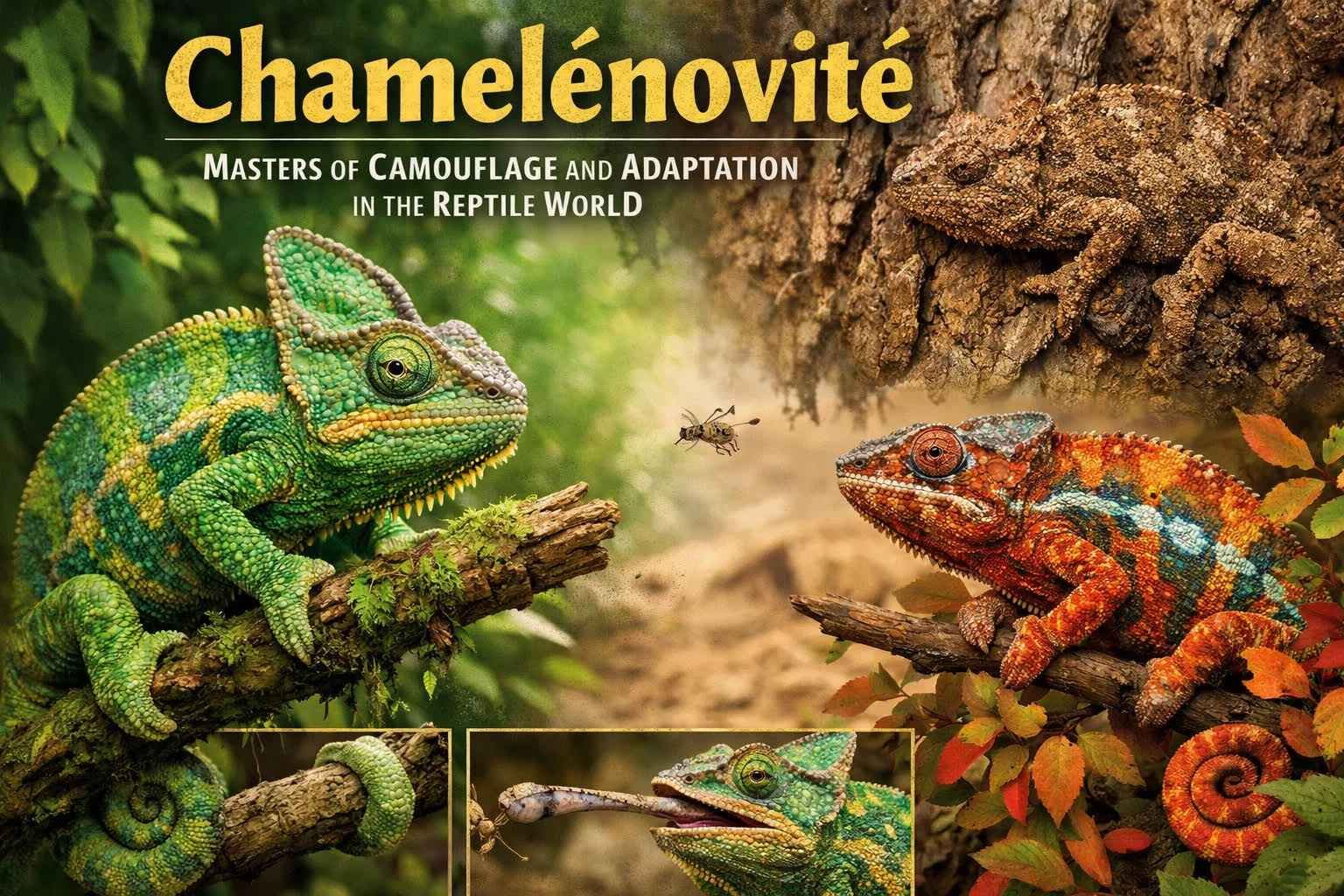
Chameleons, members of the family Chamaeleonidae (also referred to as Chameleónovité in Slovak), are among the most distinctive and adaptive lizards on the planet. Their remarkable abilities to change color, unique physical features, and fascinating behaviors have made them icons of evolutionary adaptation. These lizards are renowned not only for their camouflage abilities but also for their highly specialized morphology, complex communication systems, and varied ecological roles.
In this article, we explore the taxonomy, anatomy, habitat, behavior, feeding habits, and conservation status of chameleons, offering a comprehensive look at these incredible reptiles.
Taxonomy and Evolution of Chameleons
Chameleons belong to the family Chamaeleonidae, which is part of the larger order Squamata, encompassing all lizards and snakes. Within this family, there are over 200 recognized species spread across Africa, Madagascar, southern Europe, and parts of Asia. Chameleons are classified within the suborder Iguania, which also includes iguanas and agamids, though they represent a more specialized and unique branch of this group.
The family Chamaeleonidae includes various genera such as Chamaeleo, Furcifer, Calumma, and Brookesia, each comprising multiple species. These species vary significantly in terms of size, coloration, and behavior, with some, like the Brookesia micra, being some of the smallest reptiles in the world, while others, such as the Furcifer oustaleti, are much larger.
Chameleons have a long evolutionary history, with evidence of their divergence from other lizards dating back over 100 million years. Their unique traits, such as their color-changing abilities, zygodactylous feet, and prehensile tails, evolved to help them adapt to specific ecological niches, primarily in tropical and subtropical environments.
Physical Characteristics of Chameleons
Chameleons are known for their distinctive physical traits, which not only help them survive in the wild but also make them instantly recognizable. Some of their most notable features include:
Color-Changing Skin
One of the most famous features of chameleons is their ability to change color. This remarkable ability is not solely for camouflage but also serves purposes such as social signaling, temperature regulation, and stress response. The color change is facilitated by special pigment cells in their skin, called chromatophores, which contain different pigments. Beneath these cells are iridophores and guanophores, which reflect light and contribute to the variety of colors a chameleon can display.
The factors that influence color change include:
- Environmental temperature
- Mood — for example, a male might display vibrant colors to attract a mate or show aggression toward a rival.
-
Social interactions — to communicate with other chameleons or deter predators.
- Light conditions — darker colors can help absorb heat, while lighter colors reflect sunlight.
Zygodactylous Feet and Prehensile Tail
Chameleons are tree-dwelling animals, and their zygodactylous feet are adapted for grasping branches. Their feet are divided into two opposing groups of toes, allowing them to securely hold onto tree limbs and other structures. This gripping ability is essential for their arboreal lifestyle, as it enables them to move easily through the branches.
Additionally, many chameleons possess a prehensile tail, which acts like an extra limb to help them balance on thin branches and provide stability when climbing.
Eyes and Vision
Chameleons have some of the most sophisticated eyes in the animal kingdom. Their eyes can move independently of each other, allowing them to observe two different areas simultaneously. This is particularly useful for spotting predators or prey while staying hidden in the foliage. The eyes are also capable of remarkable focusing ability, enabling chameleons to judge the distance of objects accurately, which is crucial for their hunting techniques.
Tongue and Feeding Mechanism
Chameleons are primarily insectivores, and their feeding habits are equally unique. They possess a ballistic tongue that can extend up to twice their body length to capture prey. The tongue is launched with incredible speed and precision, and its sticky tip ensures that prey is firmly captured. This feeding strategy is highly effective for catching insects like crickets, flies, and grasshoppers, though larger chameleons may also eat small vertebrates such as birds or other reptiles.
Habitat and Distribution
Chameleons are found in a variety of habitats, from the rainforests of Madagascar to the dry savannas of Africa and parts of Asia. They are predominantly arboreal, meaning they live in trees and shrubs, although some species have adapted to more terrestrial environments.
Africa and Madagascar
The largest diversity of chameleons is found on the island of Madagascar, which is home to over half of all chameleon species. Species such as the Panther Chameleon (Furcifer pardalis) and the Parson’s Chameleon (Calumma parsonii) are native to Madagascar’s forests and are known for their vibrant colors and large size.
In Africa, chameleons are spread across various ecosystems, from tropical rainforests to semi-arid regions. Some species, such as the Veiled Chameleon (Chamaeleo calyptratus), are found in the deserts and semi-deserts of the Arabian Peninsula.
Europe and Asia
In Southern Europe, chameleons such as the Common Chameleon (Chamaeleo chamaeleon) can be found in countries like Spain, Portugal, and parts of France and Italy. These species are adapted to more temperate climates compared to their tropical relatives.
Some species have also been introduced to areas outside their natural range, including parts of Florida and California in the United States, where they have established populations.
Behavior and Social Interactions
Territoriality and Mating Behavior
Chameleons are generally solitary and highly territorial creatures. Male chameleons are known to engage in displays of aggression to defend their territory and attract mates. These displays often involve changes in coloration, where males will show brighter colors to signal dominance or to woo females.
Camouflage and Defense Mechanisms
Chameleons are famous for their camouflage abilities, which they use to hide from predators. By blending in with their surroundings, they can evade detection from both prey and potential threats. Their color-changing abilities help them adapt to different backgrounds, whether it’s a green leaf, brown bark, or a sandy desert floor.
If threatened, chameleons can also inflate their bodies and extend their limbs to appear larger and more intimidating. Some species, like the Jackson’s Chameleon, also have horns on their heads that further contribute to their defensive behavior.
Communication Through Color
While camouflaging is the most well-known use of color change, chameleons also use color to communicate with one another. For instance, a brightly colored male may be signaling his readiness to mate, while a dark-colored male might be signaling aggression or dominance to other males. Females may also change color to signal their reproductive status.
Diet and Feeding Habits
Chameleons are predominantly insectivorous, feeding mainly on a variety of arthropods, including:
- Crickets
- Grasshoppers
- Flies
- Beetles
-
Moths
Their ballistic tongue is a key tool in capturing prey, as it allows them to snatch insects from a distance with impressive speed and accuracy. Some larger species may also eat small vertebrates, including other lizards and birds.
Chameleons are opportunistic feeders, often waiting motionless for prey to come within range before launching a tongue strike. Their ambush hunting style is highly effective and ensures they capture enough food to meet their energy needs.
Reproduction and Lifespan
Chameleons have fascinating reproductive habits. Most species are oviparous, laying eggs that incubate for several months before hatching. The female typically lays a clutch of 10 to 60 eggs, depending on the species. The eggs are often buried in soil or hidden in leaf litter to protect them from predators.
Some species, such as the Veiled Chameleon, are viviparous, meaning they give birth to live young. This reproductive strategy is more common in species that live in more temperate or cooler climates, where egg incubation may be challenging.
Lifespan
Chameleons generally have short lifespans. Depending on the species, they can live anywhere from 2 to 10 years in the wild. The common chameleon (Chamaeleo chamaeleon) typically lives around 5 to 6 years, while larger species like the Parson’s Chameleon may live up to 10 years.
Conservation and Threats
Many chameleon species face threats from habitat destruction, the illegal pet trade, and climate change. While some species are abundant in their natural habitats, others, particularly those found only on Madagascar, are listed as endangered or critically endangered.
Species such as the Pygmy Chameleon (Rhampholeon) are threatened by habitat loss due to deforestation and agricultural expansion. Furthermore, the international pet trade has led to the capture and sale of wild chameleons, putting additional pressure on populations.
Conservation efforts are underway, with many species protected by national and international laws. Organizations such as the International Union for Conservation of Nature (IUCN) and CITES work to regulate the trade of chameleons and promote their protection in the wild.
Chameleons and Humans
Chameleons have long fascinated humans, and their unique features make them popular in both the pet trade and cultural symbolism. However, they require specialized care due to their specific environmental and dietary needs. In the wild, they play an important role in controlling insect populations and maintaining ecological balance.
In various cultures, chameleons are seen as symbols of adaptability, change, and transformation. Their ability to shift between colors has made them powerful metaphors in art, literature, and folklore.
Conclusion
Chameleons, or Chameleónovité, are truly remarkable reptiles. From their color-changing abilities to their specialized hunting techniques and unique reproductive strategies, chameleons offer a fascinating glimpse into the world of adaptation and evolution. However, despite their resilience, many species face significant challenges, making conservation efforts crucial for ensuring their survival.
As we continue to study and appreciate these incredible creatures, it is essential to recognize the delicate balance of their ecosystems and the need for continued protection. Understanding the life and behavior of chameleons not only enhances our knowledge of these fascinating reptiles but also reminds us of the importance of preserving the natural world around us.