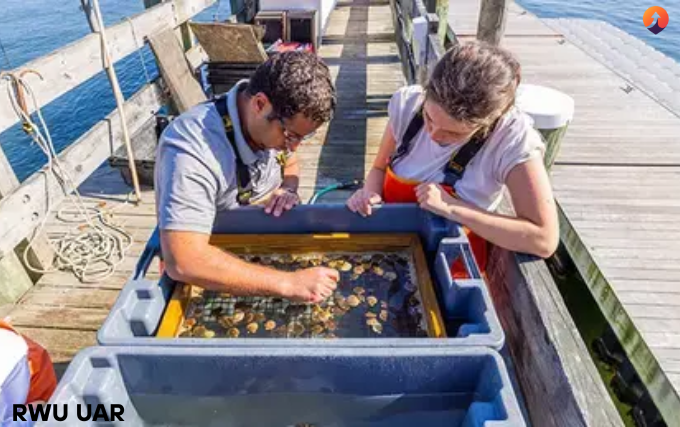
RWU UAR stands for Roger Williams University – University Academic Relations, a strategic initiative designed to enhance collaboration, innovation, and global partnerships within higher education. This program focuses on uniting universities, research institutions, and industry leaders to promote mutual academic growth and global engagement. Through RWU UAR, Roger Williams University (RWU) seeks to create an interconnected academic environment that emphasizes shared learning, advanced research opportunities, and sustainable development.
The initiative aligns with the broader vision of higher education institutions that strive to go beyond borders. By integrating international cooperation, RWU UAR encourages institutions to collaborate on projects that impact not just their campuses but also communities worldwide. The ultimate goal is to empower students, researchers, and educators with resources and opportunities to succeed in a rapidly changing academic landscape.
The Mission Behind RWU UAR
The mission of RWU UAR is rooted in promoting education as a bridge between cultures and disciplines. It aims to strengthen academic networks that facilitate the exchange of knowledge, technology, and research between universities and partner organizations. By doing so, RWU UAR positions itself as a leader in fostering educational diplomacy — a concept that uses academic cooperation to solve global challenges.
This mission also supports the Sustainable Development Goals (SDGs), particularly those related to quality education, innovation, and partnership. Through RWU UAR, Roger Williams University demonstrates a commitment to empowering global citizens who are capable of thinking critically, innovating responsibly, and contributing meaningfully to society.
How RWU UAR Promotes Global Collaboration
RWU UAR functions as a platform for building long-term, impactful partnerships with universities and institutions around the world. Its collaborative programs are designed to encourage mobility, innovation, and mutual understanding. Exchange programs, joint research initiatives, and co-authored publications are just a few of the ways RWU UAR promotes cooperation.
By connecting departments and faculties across continents, RWU UAR ensures that knowledge flows freely. It also encourages interdisciplinary collaboration — for example, by linking environmental scientists with economists or architects with urban planners — to generate holistic solutions to complex global issues. This diversity of collaboration is what makes RWU UAR stand out as a model for academic partnership in the 21st century.
Academic Exchange and Research Opportunities
One of the most impactful components of RWU UAR is its focus on student and faculty exchange programs. These opportunities allow participants to experience new academic environments, share cultural values, and gain international perspectives. Students benefit by developing global competencies and understanding how their fields of study apply in different contexts.
For researchers, RWU UAR opens the door to international collaboration on major research initiatives. It provides funding opportunities, mentorship programs, and access to global databases and laboratories. This enhances the quality and reach of research outputs, allowing participants to publish in top-tier journals and contribute to global knowledge networks.
The Role of Technology in RWU UAR
Technology plays a central role in connecting universities under the RWU UAR initiative. With digital transformation reshaping education, the program utilizes virtual classrooms, online conferences, and cloud-based research tools to facilitate interaction between global partners. This digital integration ensures that geographical boundaries do not hinder collaboration.
Virtual exchange programs, for instance, have become a key feature of RWU UAR, allowing students and educators to engage in cross-border learning experiences from anywhere in the world. Additionally, data-driven research collaborations are made possible through shared cloud platforms, where universities can analyze and publish findings collaboratively in real time.
Strengthening Faculty Development and Institutional Capacity
RWU UAR is not only about student opportunities — it also emphasizes faculty development and institutional strengthening. Through workshops, training sessions, and leadership programs, the initiative helps educators adopt innovative teaching methodologies and improve academic management. These efforts ensure that faculty members remain at the forefront of educational excellence.
For institutions, RWU UAR provides strategic guidance on policy development, accreditation, and research management. Partner universities benefit from RWU’s expertise in educational quality assurance, curriculum design, and international program coordination. The result is a network of universities that are globally competitive, academically robust, and institutionally resilient.
The Impact of RWU UAR on Students and Society
Students are the ultimate beneficiaries of the RWU UAR initiative. By participating in international programs and research projects, they gain practical experience, cultural awareness, and professional networks that give them a competitive edge in the global job market. Moreover, these experiences help shape their understanding of global citizenship and social responsibility.
Beyond the individual level, RWU UAR contributes to societal advancement. By connecting universities with industries, governments, and NGOs, it ensures that academic research translates into real-world solutions. Whether through sustainable design, healthcare innovation, or public policy reform, the outcomes of RWU UAR collaborations often have a direct positive impact on communities worldwide.
Challenges and Future Prospects of RWU UAR
Like any large-scale academic initiative, RWU UAR faces challenges such as funding limitations, logistical barriers, and cultural differences. Coordinating programs across different education systems and time zones can be complex. However, the strength of RWU UAR lies in its adaptability and commitment to continuous improvement.
Looking ahead, the program aims to expand its network of partner institutions and integrate more fields of study. It also plans to enhance its use of AI and digital tools to simplify international academic management. As global education becomes increasingly interconnected, RWU UAR’s framework offers a scalable model for universities seeking to collaborate without boundaries.
Why RWU UAR Matters in Today’s Academic World
In a time when global cooperation is more crucial than ever, RWU UAR stands out as a visionary initiative that bridges academic, cultural, and technological divides. It reinforces the idea that education is not confined to classrooms but is a collective journey toward a shared future. By prioritizing collaboration over competition, RWU UAR reshapes how universities perceive their roles in global progress.
Moreover, initiatives like RWU UAR set a benchmark for other institutions aspiring to become global leaders in education. Its holistic approach to academic partnerships, technology integration, and social impact demonstrates how universities can remain relevant and influential in a fast-evolving world.
Conclusion
RWU UAR represents a powerful step toward a more connected, collaborative, and innovative academic future. By aligning global partnerships with shared educational values, the initiative strengthens the role of universities as agents of progress and change. Through its focus on research, exchange, technology, and inclusivity, RWU UAR ensures that learning extends beyond borders — shaping a generation ready to tackle tomorrow’s global challenges.